
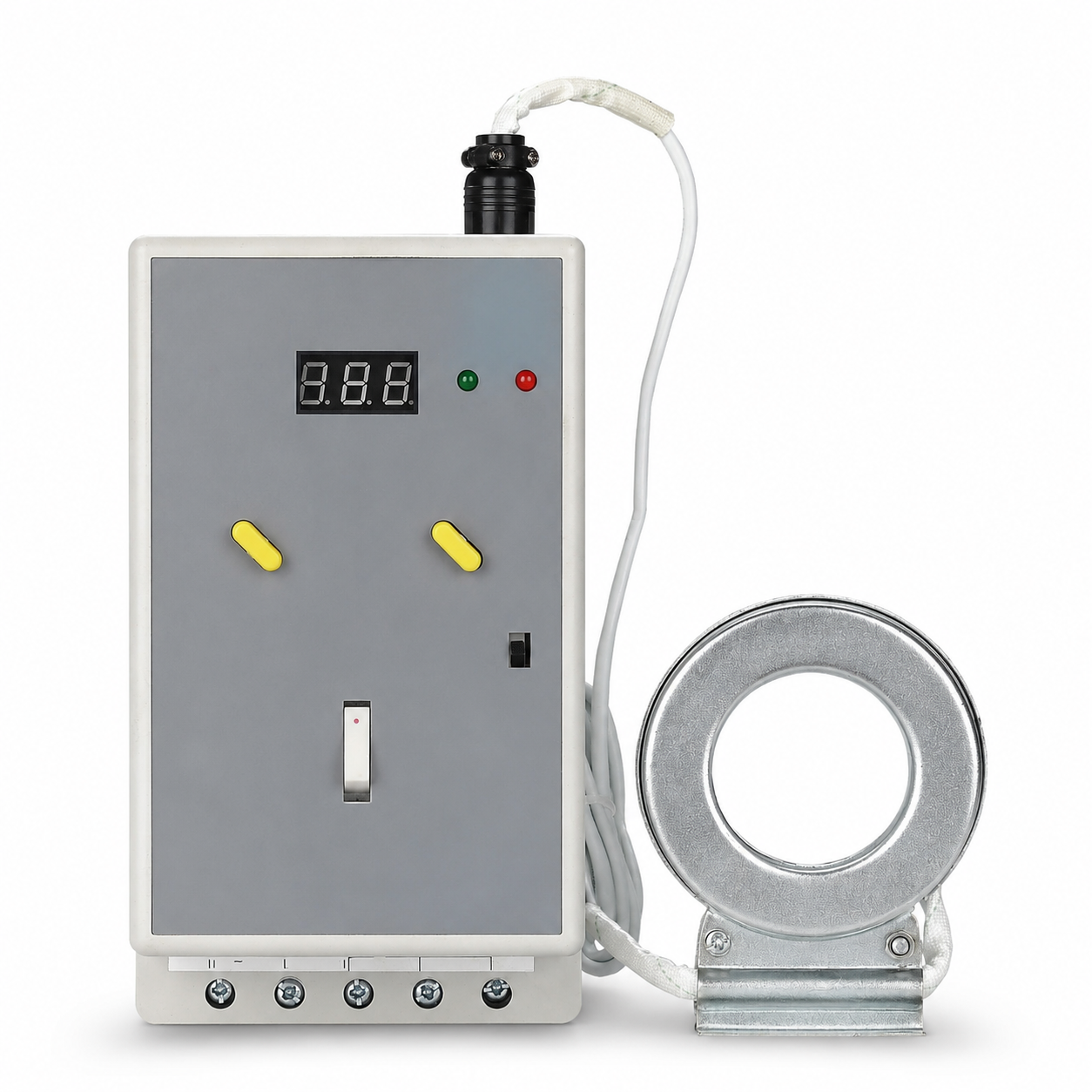
NJL1 Series Residual Current Relay

Product category:
Protection Relay
Product code:
P-533
Model:
NJL1

Function & Use (Application Scenarios)

Relays, protective relays are mainly used in combination with AC contactors or circuit breakers to form leakage protection devices, and their main function is to provide indirect contact protection against life-threatening electric shocks. They are suitable for low-voltage distribution systems with directly grounded neutral points (380V/220V).

Surprise on inquiry

Product highlights

  • Leakage current protection support
  • Engineering Application Compatibility
  • Stable and reliable operation
  • Easy system integration

Model

NJL1

Main Product Parameters

CategoryRelay Protection and Automation DevicesSecondary CategoryProtective Relay

Product details

Function and Purpose

The NJL1 series residual current relay, combined with an AC contactor or circuit breaker, forms a residual current protection device. Its main function is to provide indirect contact protection against life-threatening electric shocks. It is suitable for low-voltage distribution systems with directly grounded neutral points (380V/220V), improving the safety of power grid operations.

Detailed Parameters

Parameter CategoryParameter ItemParameter Value
ItemModelNJL1-250
NJL1-400
NJL1-630
Rated Operating Voltage380V
380V
380V
Rated Auxiliary Power Supply Voltage220V
220V
220V
Rated Frequency50Hz
50Hz
50Hz
Rated Current250A
400A
630A
Rated Residual Operating Current I △n300mA/500mA Adjustable
300mA/500mA Adjustable
Rated Residual Non-Operating Current150mA/250mA Adjustable
150mA/250mA Adjustable
Operating TimeI △n ≤0.3s; 2I △n ≤0.15s; 5I △n ≤0.04s; 10I △n ≤0.04s
Reset Time20s~60s
20s~60s
20s~60s
Operating Characteristic ClassificationAC Type
AC Type
AC Type
Output Contact Rated Capacity380 2A
380 2A
380 2A
Output Contact Usage CategoryAC-15
AC-15
AC-15
Rated Short-Time Withstand Current3000A
4000A
6300A

Requirement confirmation

Application, rating, quantity and drawings are checked first.

Factory matching

Supplier capacity, certificates and production slot are reviewed.

Order transaction

Confirm commercial terms, sign the commercial contract, and confirm the related document checklist.

Shipment control

Packing photos, inspection records and delivery status are tracked.