
Overall power distribution solution for new energy vehicle charging stations
From power distribution transformation to operation monitoring, the full stack supports the stable operation of charging stations.
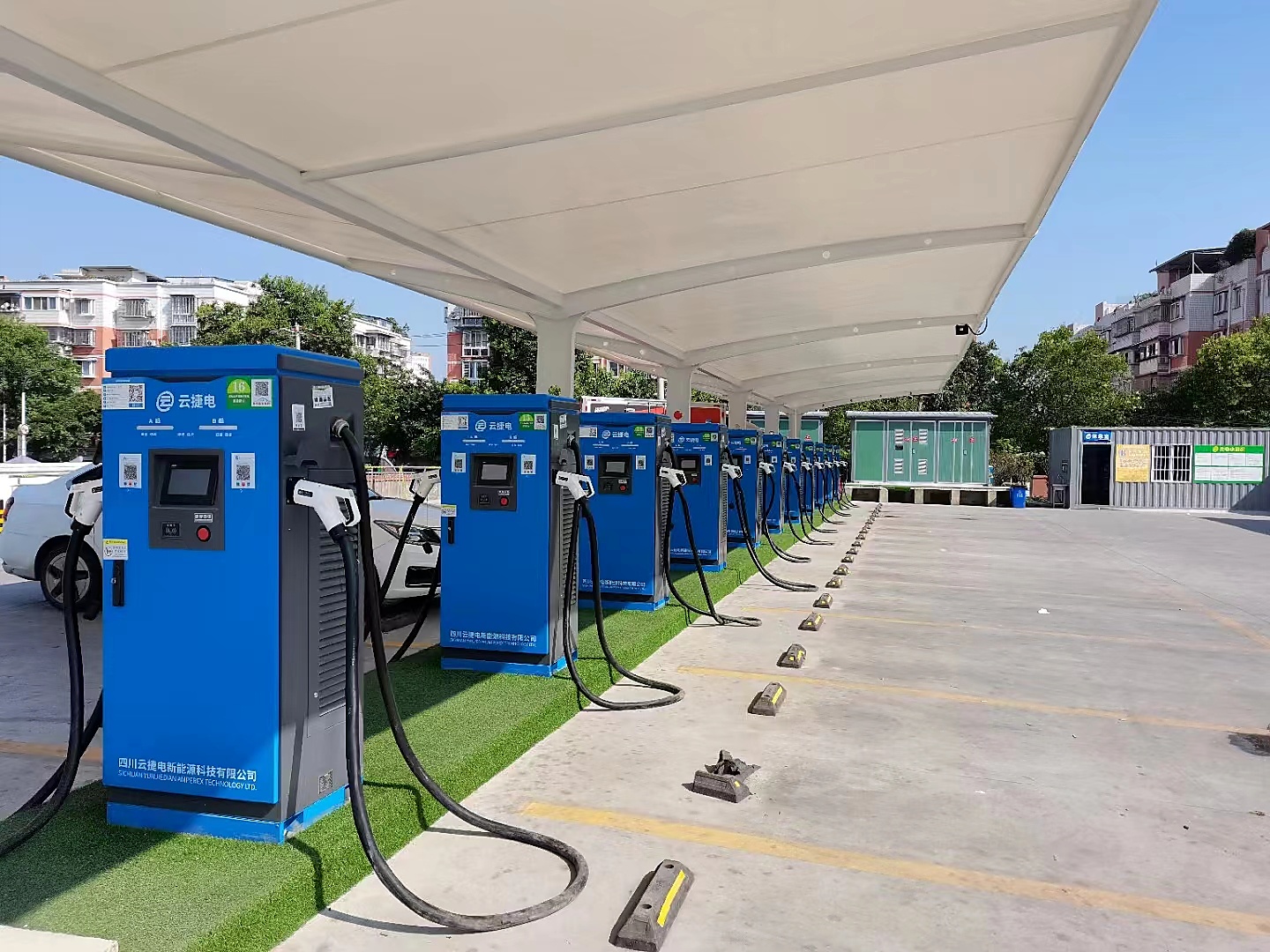
Detailed plan description
For public charging stations, shopping mall parking lots, logistics park charging stations and other scenarios, it provides integrated services such as power distribution capacity assessment, capacity expansion application, high and low voltage power distribution transformation, charging pile support, metering system, and operation monitoring platform. It supports orderly charging, peak and valley electricity price billing, remote start-stop management, adapts to all categories from 7kW AC piles to 240kW super fast charging piles, and solves core problems such as insufficient power distribution capacity and difficult operation and management in the construction of charging stations.
Adapted to Indonesia
Solve the procurement problems of "uncertain power distribution capacity, difficult selection of fast charging specifications, repeated supplementation of grid connection data, and slow after-sales response" for SPKLU, public parking lots, logistics fleets and shopping mall owners in Indonesia.
The solution packages and delivers capacity assessment, 7kW/22kW AC piles and 60kW/120kW/240kW DC fast charging selection, metering, operation platform, spare parts and on-site commissioning, focusing on adapting to Indonesia’s 230/400V, 50Hz low-voltage system, hot and humid climate, lightning protection grounding and PLN access review.
Professional specifications and standards based
For professional configuration, it is recommended to use 3P+N+PE 400V low-voltage incoming line, and the station-level bus should be checked according to the peak load and simultaneous coefficient; public fast charging should be prioritized to configure CCS2/Type 2 interface, which is compatible with subsequent fleet expansion; the meter is recommended to be Class 0.5S/1.0, the cabinet IP54/IP55, IK10, and the key switching appliances should be MCCB/ACB and equipped with Type B or equivalent DC leakage protection. Refer to IEC 61851, IEC 62196, IEC 61439, IEC 60364, IEC 60529, and prepare it in conjunction with SNI/PLN project materials.
Product specification comparison table
| Configuration gear | Typical specifications | Applicable buyers/scenarios | Purchase reminder |
|---|---|---|---|
| Commercial AC charging | 7kW/22kW,230/400V,Type 2 | Shopping malls, apartments, office buildings | Low cost, but need to calculate the turnover rate of slow charging at night |
| Public DC fast charging | 60-120kW, 400V, CCS2, 0.5S metering | SPKLU, parking lot, park | Prioritize checking the transformer margin and busbar temperature rise |
| Fleet supercharging station | 180-240kW, intelligent dispatching, remote monitoring | Logistics, buses, taxi fleets | Recommended configuration of orderly charging and spare parts packages |
Original experience and test data
Scarce experience: Lightning strikes in Indonesia’s rainy season and site grounding quality will directly affect the offline rate of charging piles. It is recommended to show ground resistance testing, SPD graded protection, 72-hour load aging and station-level temperature rise records in the plan diagram. Real photos of the factory can focus on the aging rack of the charging module, the copper bar connection of the low-voltage cabinet, the FAT test bench and the background monitoring screen.
Pitfalls and pain points that I have stepped on
- The power distribution capacity of the original site is insufficient, the approval period for power capacity increase is long, the cost is high, and the project implementation is slow;
- When multiple piles are charged at full power at the same time, the bus voltage drops seriously, causing frequent trips and outages, and a high user complaint rate;
- The measurement accuracy is insufficient, there are errors in the reconciliation of electricity bills and revenue, and long-term operations cause hidden losses;
- Lacking remote monitoring capabilities, faults cannot be proactively discovered and require manual on-site inspection, resulting in extremely low operational efficiency.
Core parameters
The adaptable power of a single pile is 7kW~240kW, the power distribution system voltage is 400V, the energy measurement accuracy is 0.5, the charging system efficiency is ≥95%, and it supports orderly charging scheduling. A single station can support up to 120 piles connected at the same time.
Our special contribution
- Provide capacity assessment + power installation agency services, shortening the installation cycle by an average of 30%;
- Equipped with an intelligent power distribution control system to achieve peak-shifting and orderly charging, which can reduce the cost of capacity expansion by 30%;
- High-precision smart meter + time-based billing system, zero error in revenue reconciliation;
- Full-link operation monitoring platform, automatic fault alarm + remote reset, improving site operation efficiency by 40%.
Project income
- Economic benefits: The orderly charging solution reduces investment in capacity expansion by 30%, saving over 200,000 yuan in single-station construction costs; the installation cycle is shortened by 30%, and it can be put into operation 1 to 2 months in advance; metering accuracy is improved to eliminate leakage of revenue, and annual hidden losses are reduced by 5% to 8%.
- Operational benefits: The fault remote reset rate reaches more than 60%, site operation efficiency increases by 40%, and the number of sites managed by a single operation and maintenance personnel is doubled; the user trip complaint rate is reduced by 80%, and the user retention rate is significantly improved.
- Management benefits: time-based billing + automatic revenue statistics, financial reconciliation workload reduced by 70%.
Ready to Discuss Your Project?
Our engineering team is ready to provide efficient and cost-effective electrical solutions.